

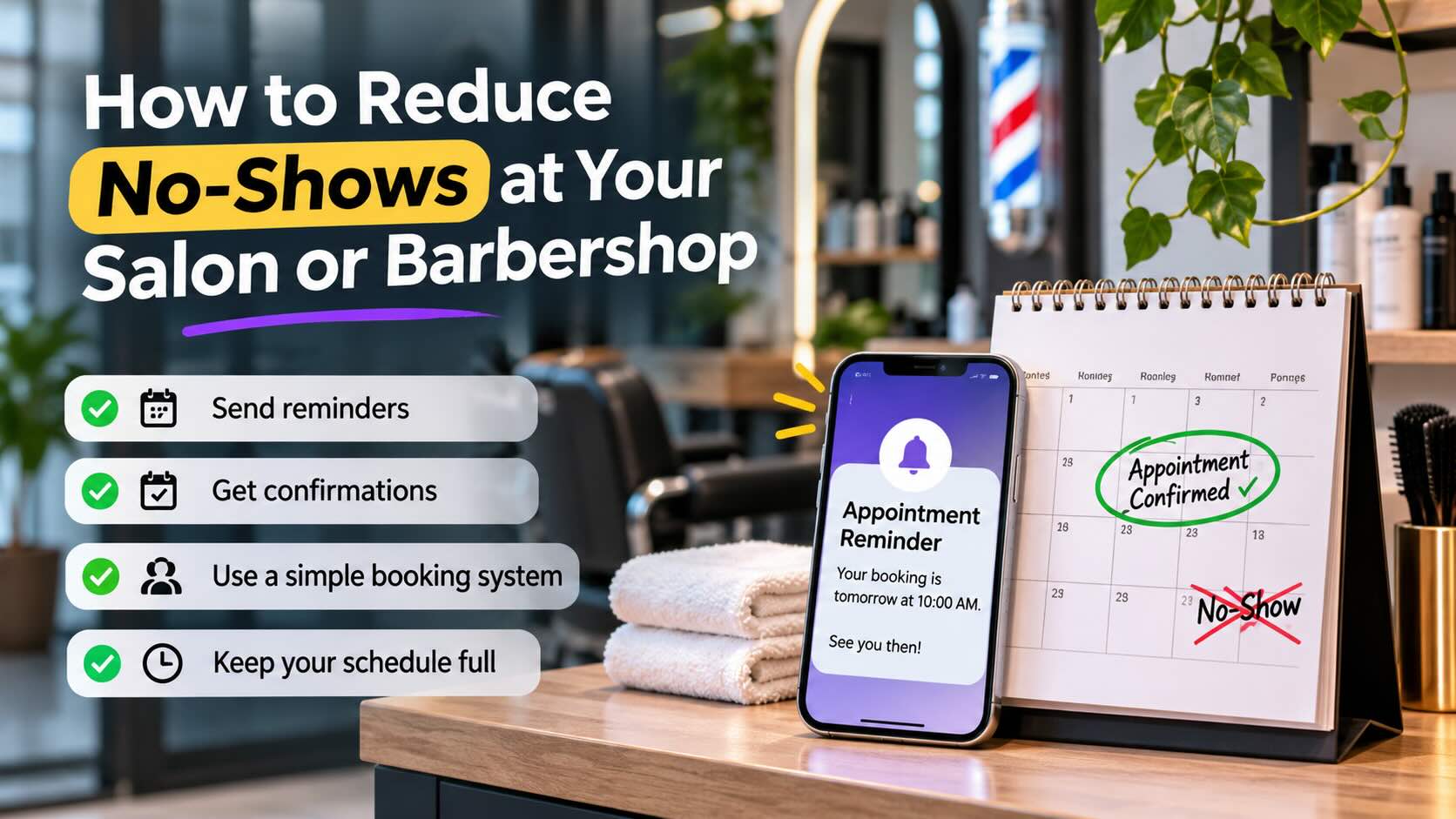
How to Reduce No-Shows at Your Salon or Barbershop
A missed appointment doesn't just cost you that one booking. It's the staff member standing around, the walk-in you turned away because the slot looked full, and — if it happens a few times a week — a real dent in your takings by month end.
Here's what actually moves the needle, roughly in order of effort.
1. Send a reminder, automatically
The single biggest driver of no-shows isn't bad clients — it's forgetting. A reminder the day before (or a few hours before, for same-day bookings) catches most of them before they become a gap in your day.
If you're taking bookings through Pennly Looks' online booking, reminders can go out automatically once a client books — no one has to remember to send them by hand.
2. Make rescheduling easier than not showing up
A client who can't make it will often just... not show up, rather than go through the hassle of calling to rearrange. The easier you make it to move a booking instead of abandoning it, the more of those slots you get back with notice instead of losing them cold.
3. Know who your repeat no-shows actually are
Most no-shows come from a small number of clients, not evenly across everyone. Once you can see visit history per client — who's booked before, who's actually turned up — it's much easier to have a quiet word, ask for a card to hold the slot, or just stop over-apologising for a pattern that isn't your fault.
4. Don't overcorrect with a harsh policy on day one
A strict no-show fee can work, but rolling it out aggressively on regular clients who've never missed a booking tends to cost more in goodwill than it recovers in fees. Start with reminders and easier rescheduling first — most shops find that alone closes most of the gap.
None of this requires new software if you're already tracking bookings properly — it's mostly about making the reminder step automatic instead of manual, and having visibility into who's actually missing appointments. If you're currently running bookings out of a paper diary or a WhatsApp thread, that's usually the first thing worth fixing.